
How WhatsApp Reminders Cut Appointment No-Shows for GCC Home-Service Businesses
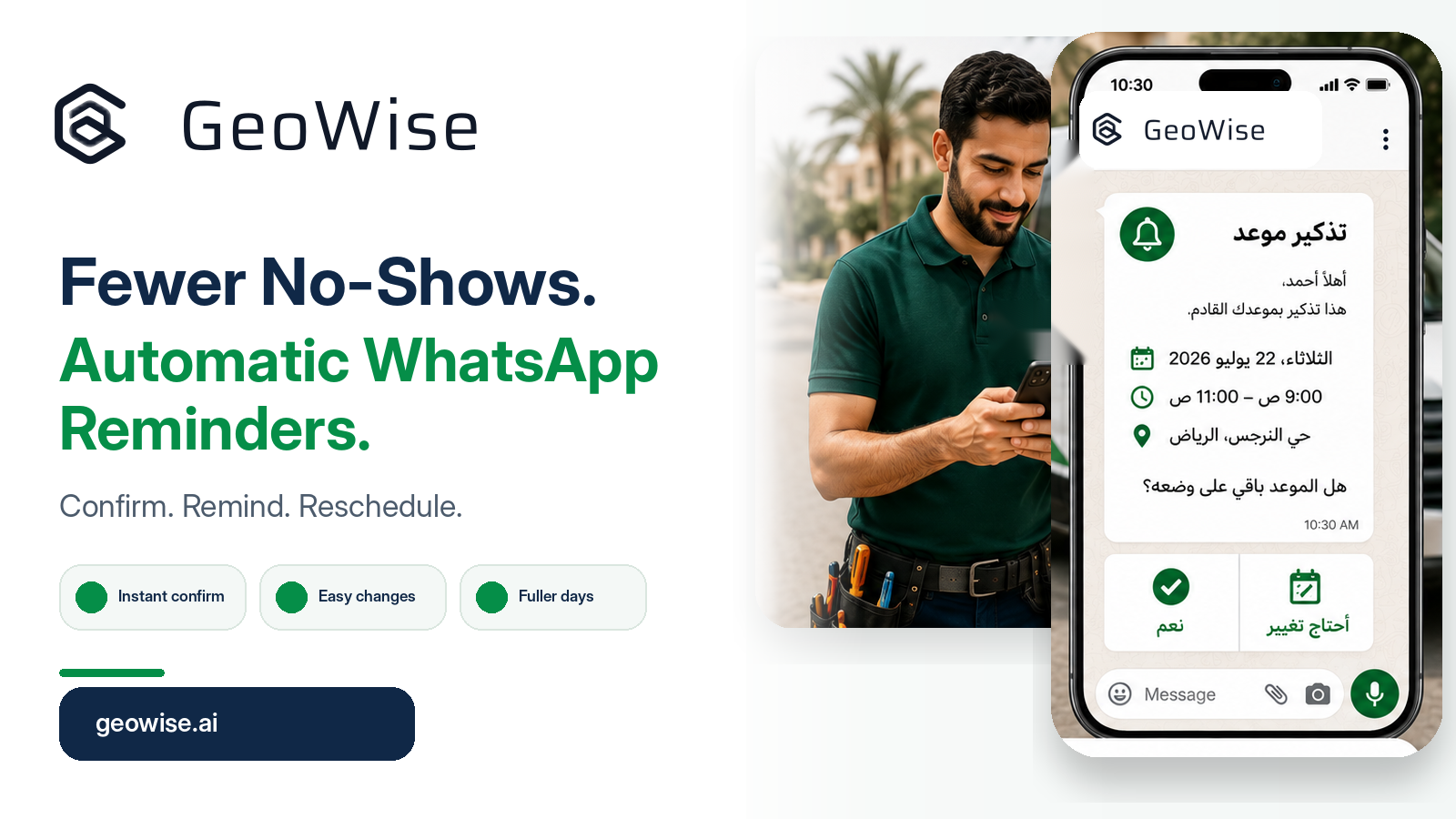
Your technician arrives, calls, gets no answer. Knocks, nobody home. Waits thirty minutes and drives away. You didn't just lose one job. You lost the travel time, the fuel, and the job that could have filled that slot.
In home services, an empty slot is expensive in a way it isn't for other businesses. You aren't selling a product off a shelf, you're selling a fixed number of team-hours. An hour that doesn't happen never comes back.
Why customers miss appointments
In the Gulf, most bookings are made casually: a WhatsApp message or a quick call, "Tuesday morning works." And then nothing. No written confirmation, no reminder, often no precise time.
The result is predictable. The customer genuinely forgets, because four days and twenty other messages sit between the booking and the visit. They never got a confirmation, so a verbal slot stays mentally filed under "maybe." Their plans changed and rescheduling felt like a hassle, so they simply went quiet. Or the time was vague: "morning" meant 9am to them and 7:30am to your crew.
None of these are bad-faith customers. They're all communication gaps, which is exactly the category automation fixes.
Why WhatsApp is the reminder channel that gets read
SMS gets mentally filed as spam. Email is close to dead in this market. Phone calls need a free staff member at exactly the right moment, and there rarely is one.
WhatsApp works because it's where the customer already is. The reminder lands in the same thread where the booking happened, with the full context visible. More importantly, they can reply. "Yes" or "can we move it?" is enough, with no call and no waiting.
The flow that actually works
Three automated moments:
Confirmation at booking. The moment the slot is agreed, the customer gets the date, the specific time window, the service, and the address in writing. Written commitments hold far better than spoken ones.
Reminder before the visit. One the day before, one short message on the morning itself, asking a single clear question: is this still good?
One-tap rescheduling. If they can't make it, they reply in the same chat and the AI offers genuinely available alternative slots and confirms the new one. This is the part people underestimate: a customer who reschedules isn't a lost customer, and a slot that frees up 24 hours early can still be resold. A no-show discovered at the door cannot.
Reminders are only half of it
Reminders reduce no-shows, they don't eliminate them. The real gain comes when reminders sit on top of intelligent scheduling.
Dynamic scheduling accounts for service zones and travel time between jobs, so the customer gets a realistic window rather than an optimistic guess. Realistic windows cut no-shows by themselves, because a large share of "no-shows" are really customers who waited an hour and left. And when a late cancellation does happen, the system can pull a nearby job forward into the gap instead of leaving it empty.
Where to start
You don't need to rebuild how you operate. Turn on instant confirmations and a pre-visit reminder, then watch your no-show rate for two weeks. That alone usually produces the clearest change you'll see.
Try it on your existing number at geowise.ai and see how many appointments come back to your schedule.
Related Articles
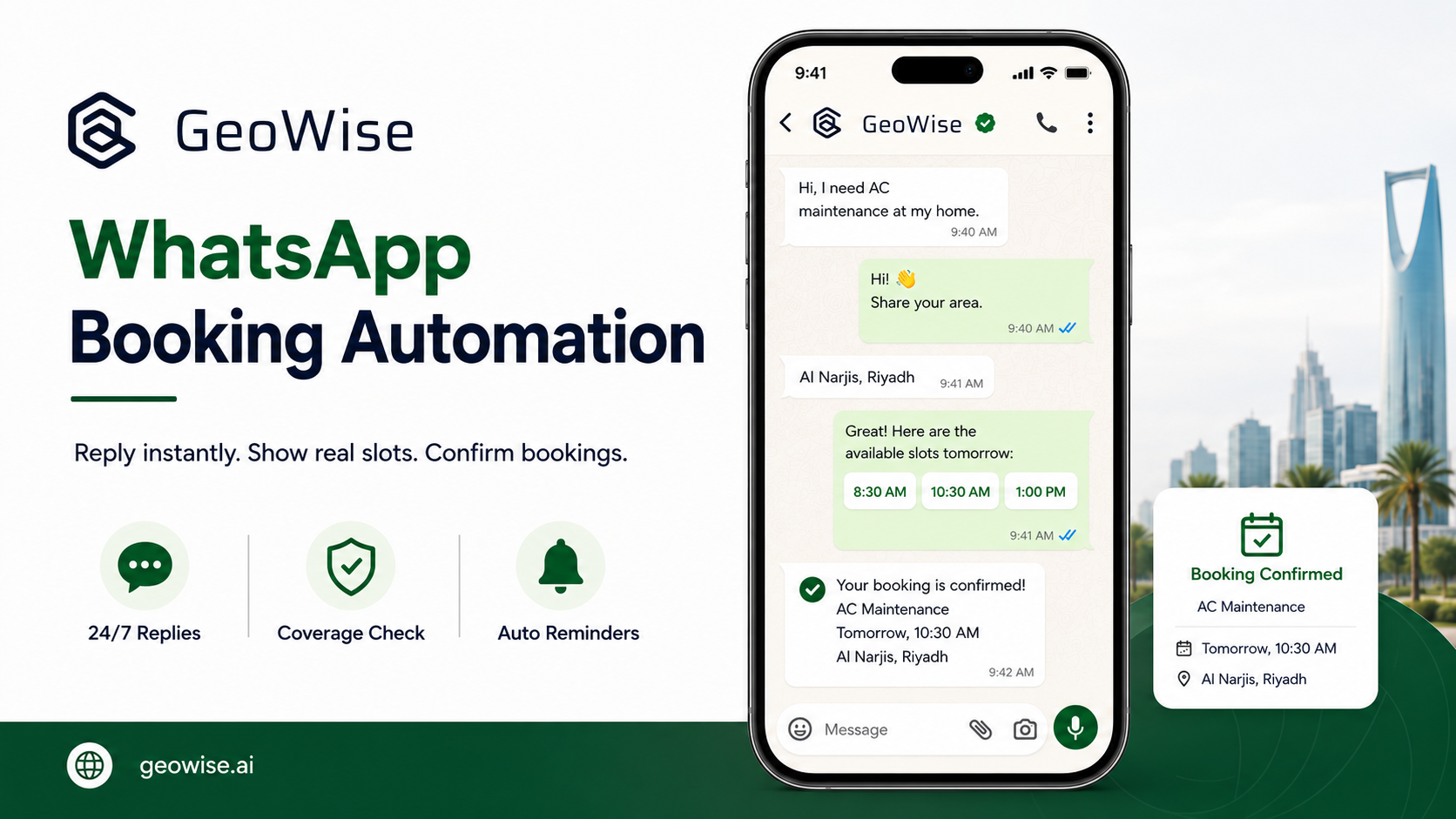
WhatsApp Business API Booking Automation: A Practical Guide for Home Services
A practical guide to automating bookings on the WhatsApp Business API for home-service companies in Saudi Arabia and the GCC, from instant reply to confirmed appointment.
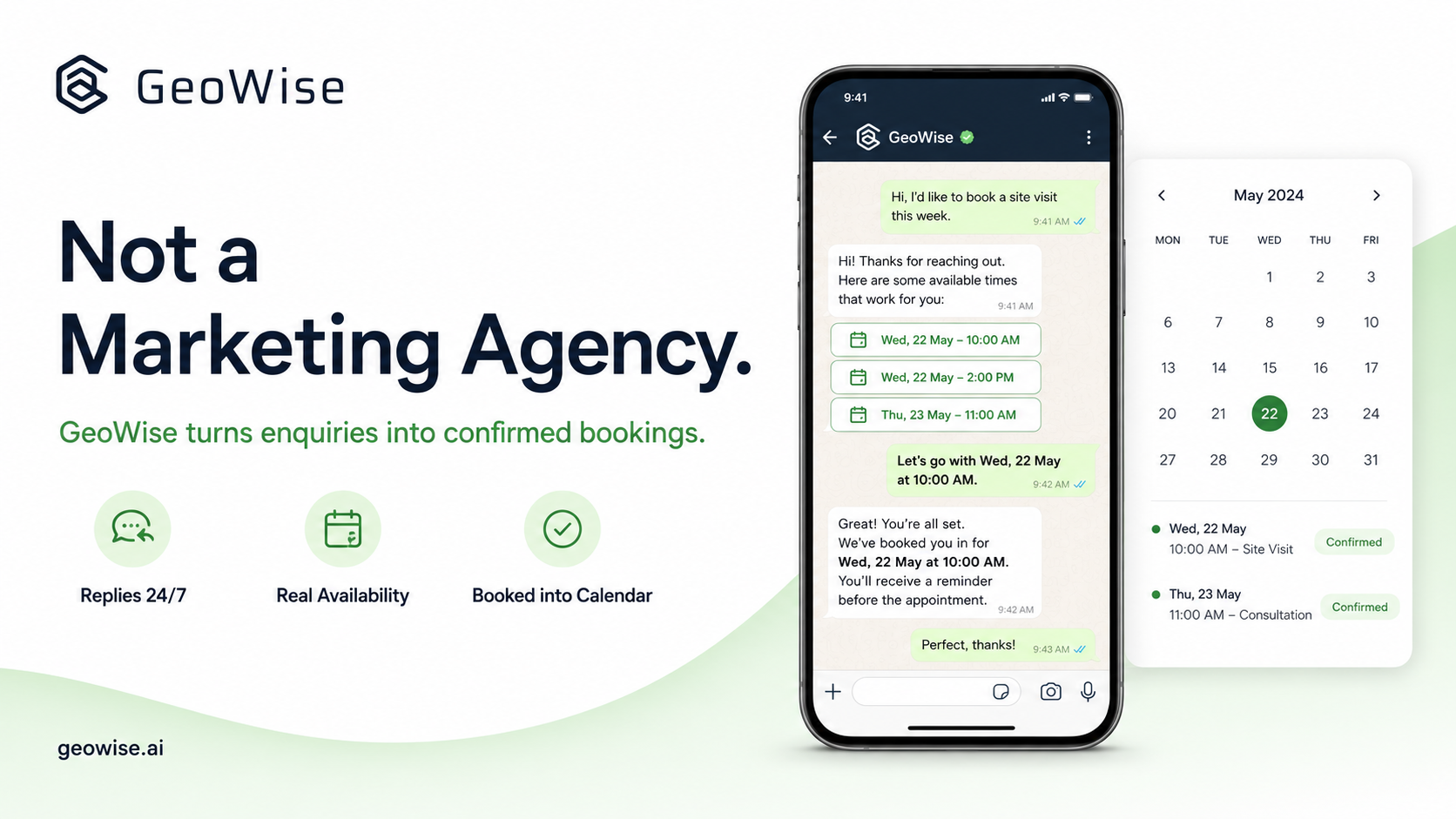
GeoWise Is Not a Marketing Agency: What It Actually Does
Discover what GeoWise actually does. It's not a marketing agency—it converts your WhatsApp enquiries into confirmed bookings, 24/7, in Arabic and English.
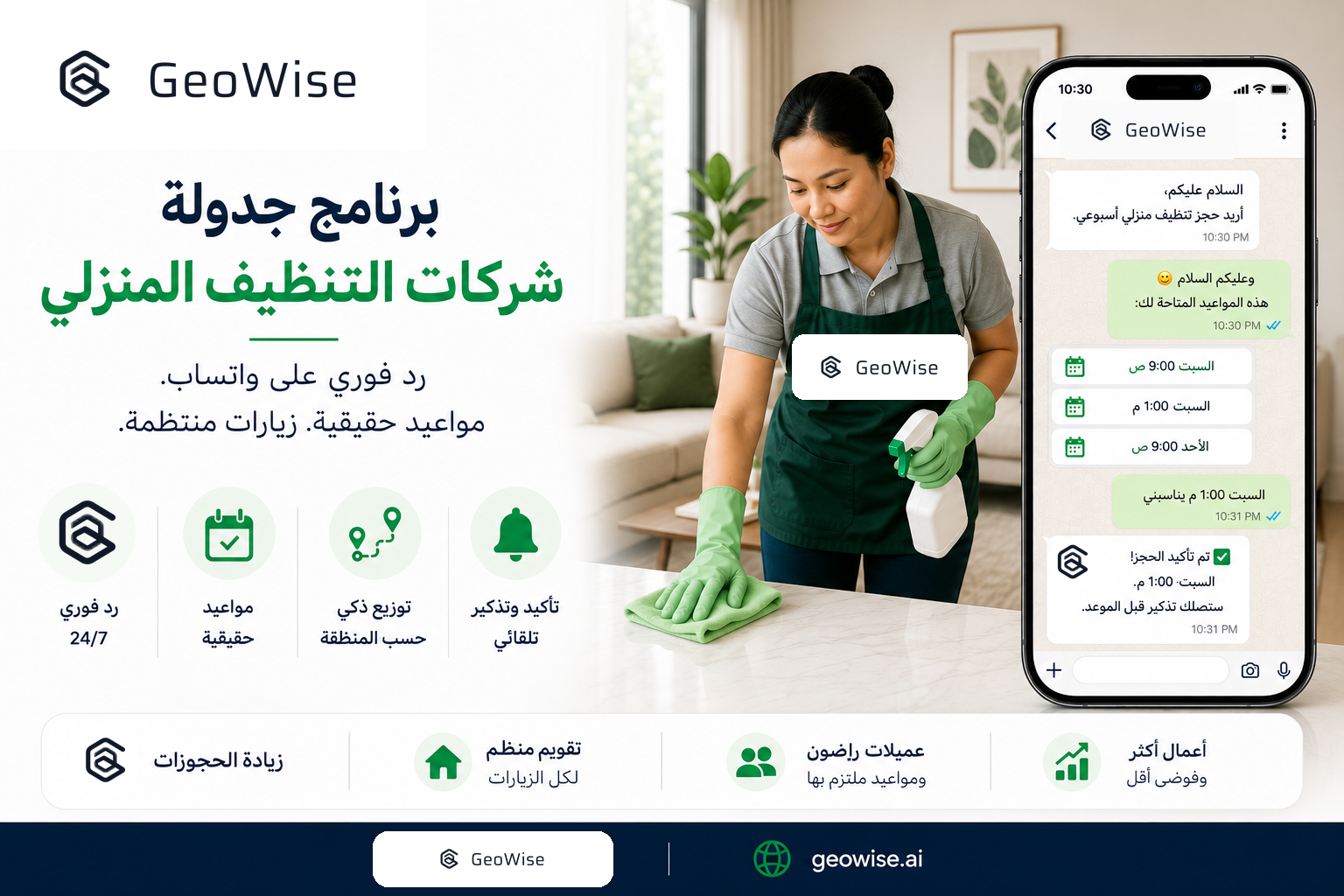
Maid Service Scheduling Software for Kuwait and Qatar: How a WhatsApp-First Booking Flow Fills the Calendar and Cuts No-Shows
Maid service scheduling software for Kuwait and Qatar: a WhatsApp-first booking flow that replies instantly, offers real slots, and cuts no-shows. Try it free.